Architecture & DevOps Publications & Guides
System design patterns, high-concurrency event streams, Kubernetes orchestrations, zero-trust cloud architectures, and database scalability.
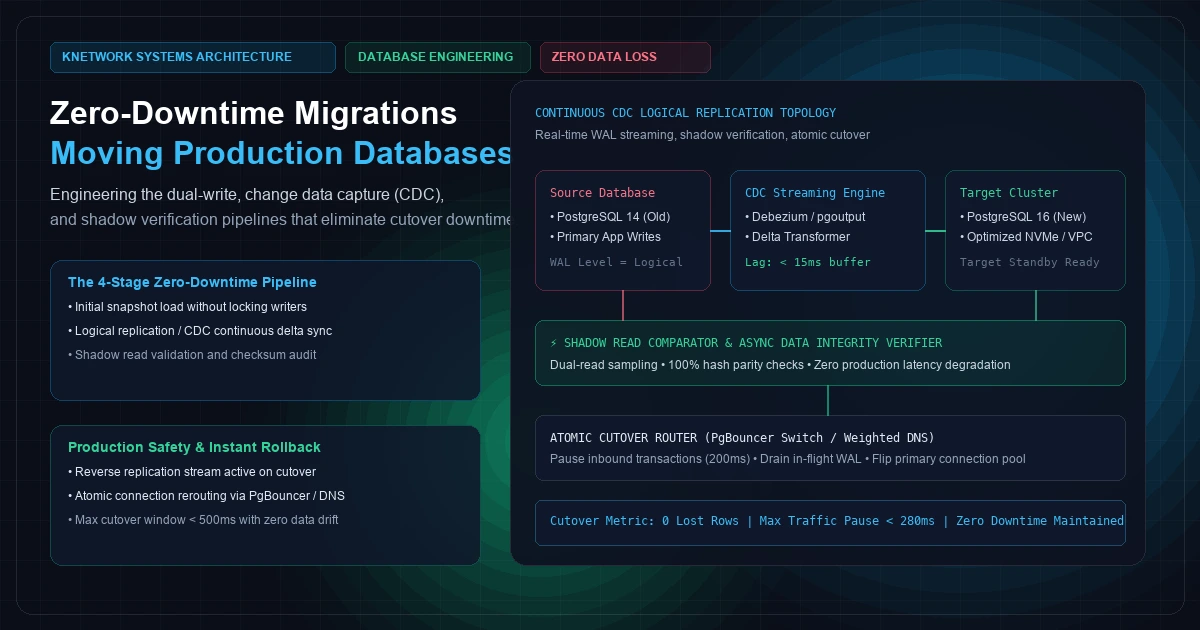
Designing Zero-Downtime Migration Pipelines: Moving Production Databases Without Data Loss
How enterprise engineering teams migrate multi-terabyte transactional PostgreSQL databases with zero downtime: log-based Change Data Capture (CDC), asynchronous shadow validation, and atomic connection pool pausing.
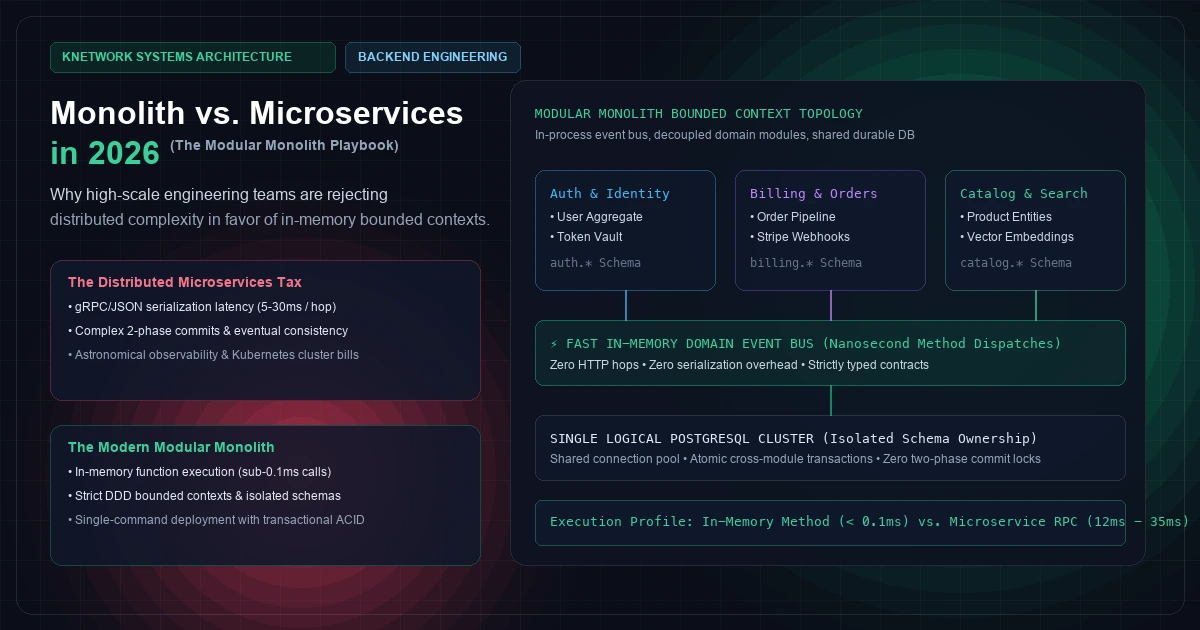
Monolith vs. Microservices in 2026: Why Modular Monoliths Are Winning Backend Architecture
Why high-velocity engineering teams in 2026 are consolidating microservices into modular monoliths: bounded contexts, isolated PostgreSQL schemas, in-memory event buses, and sub-millisecond inter-module communication without the distributed systems tax.
Latest Engineering Stories
Showing 8 publications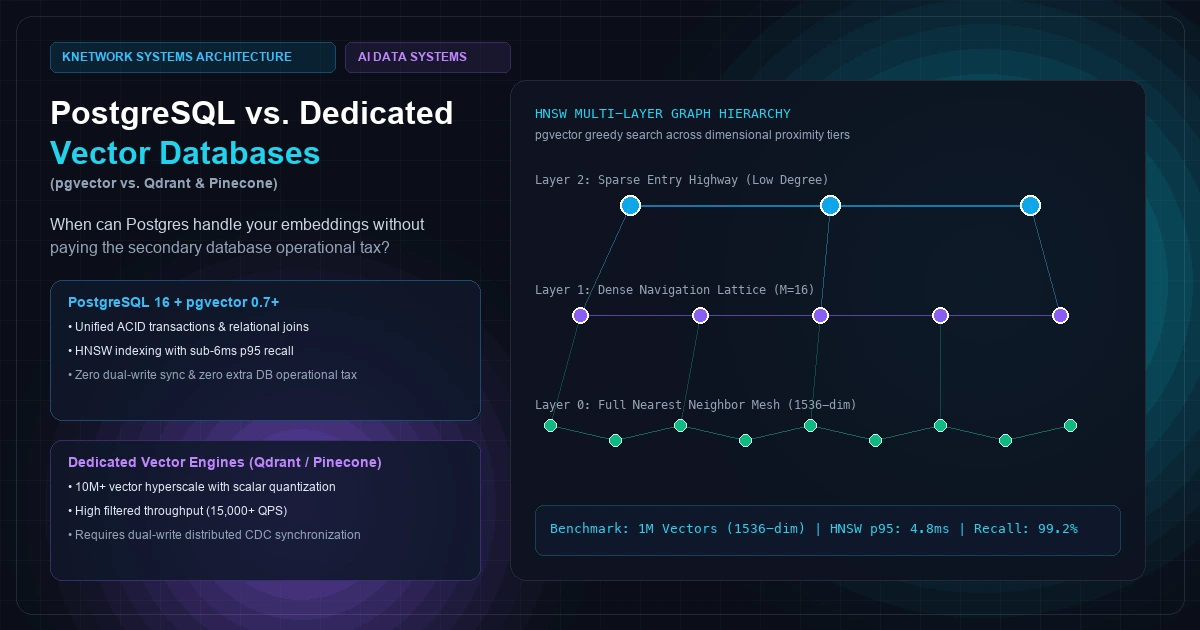
PostgreSQL vs. Dedicated Vector Stores: When Can Postgres Handle Your Embeddings?
The hidden operational tax of running dedicated vector databases alongside your primary database. How PostgreSQL 16, pgvector 0.7+, and HNSW indexing deliver sub-8ms vector search without dual-write synchronization bugs.
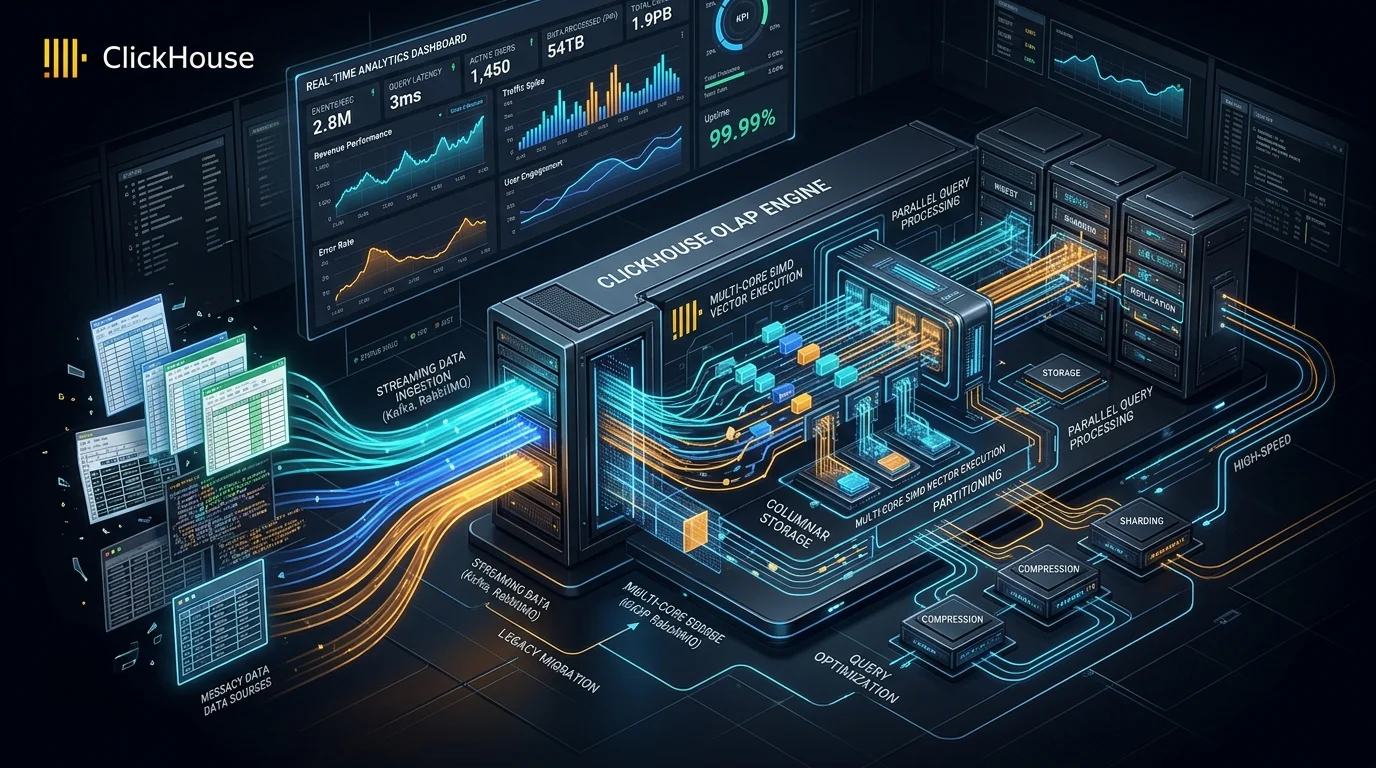
ClickHouse vs. Traditional Warehouses: Replacing Spreadsheet Sprawl with Real-Time Columnar Analytics
Why traditional row-oriented databases and bloated cloud warehouses stall under high-cardinality aggregations: how ClickHouse columnar storage, vector SIMD execution, and automated materialized views replace spreadsheet sprawl with sub-10ms executive intelligence.
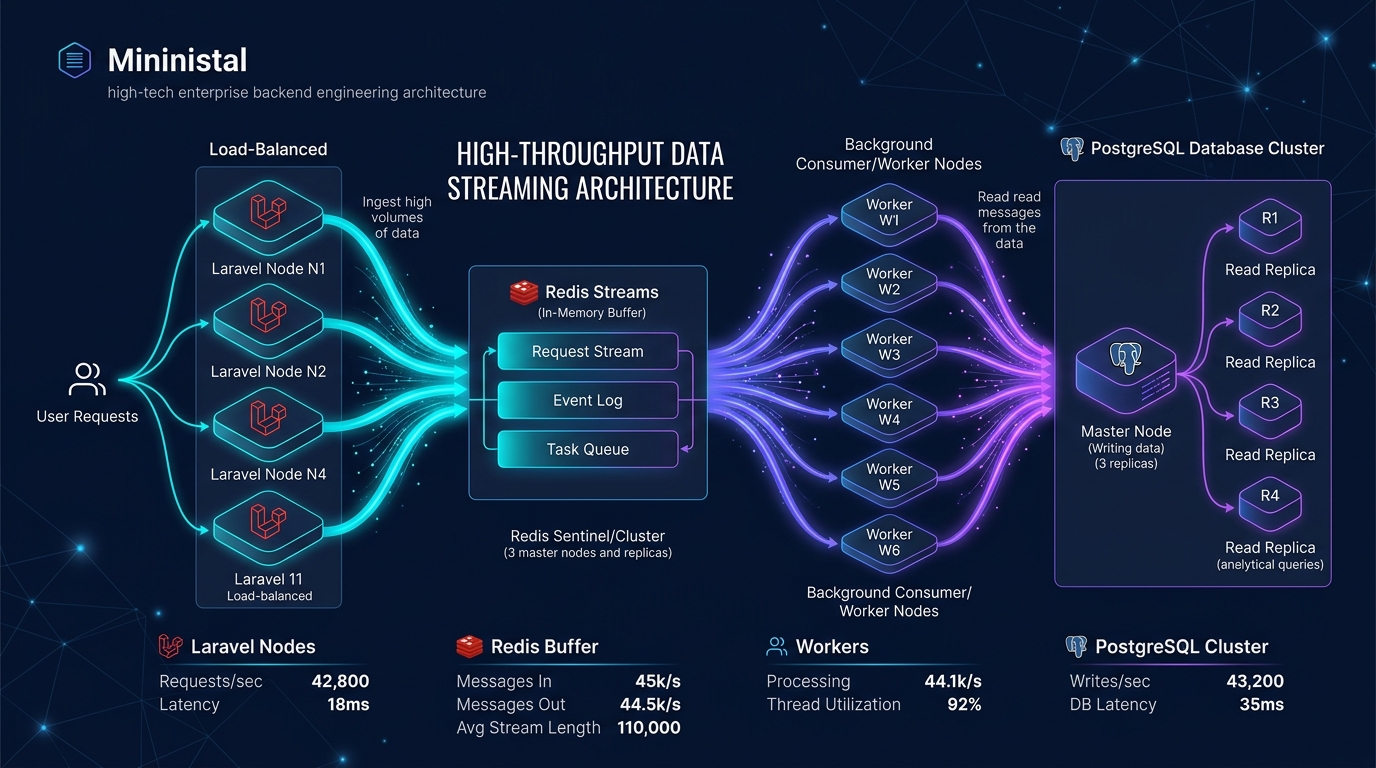
Architecting for High Throughput: When to Pair Laravel 11 with Redis for Real-Time Workloads
Under sudden spikes in concurrent traffic, monolithic applications rarely fail because of business logic—they fail at the database boundary. Here is how to architect Laravel 11, Redis in-memory streams, and micro-batched PostgreSQL writes to sustain 25,000+ RPS with sub-20ms tail latency.
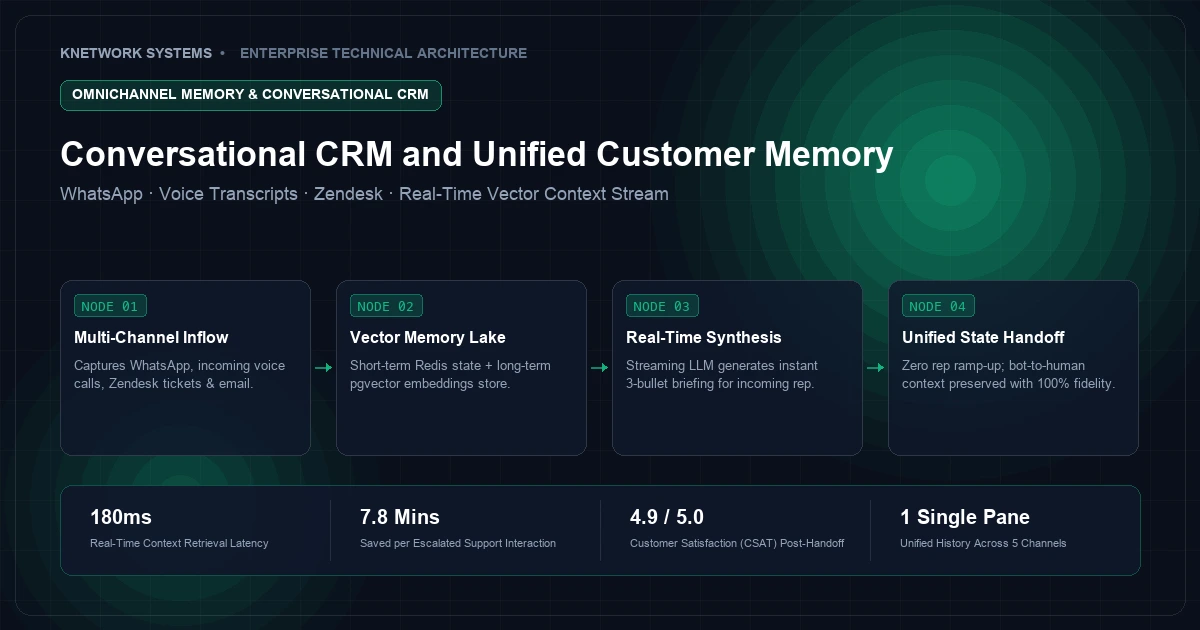
Conversational CRM and Unified Customer Memory: Bridging Multi-Channel Silos
Customers do not think in departmental silos: they start on WhatsApp, follow up via email, speak to a rep on the phone, and file an emergency support ticket. Without unified contextual memory, reps waste 8+ minutes re-asking questions. Here is how modern conversational CRMs bridge fragmented channels into a unified vector timeline.

From Syntax to Supervision: How Vibe Coding Is Evolving the Modern Engineer
The day-to-day role of the senior engineer has shifted dramatically. Instead of grinding out boilerplate syntax, engineers now operate as orchestrators and supervisors of autonomous agent swarms, focusing on formal contracts, state machines, and verification.
Popular Stories
From Syntax to Supervision: How Vibe Coding Is Evolving the Modern Engineer
2890+ reads • 9 min readConversational CRM and Unified Customer Memory: Bridging Multi-Channel Silos
2240+ reads • 8 min readClickHouse vs. Traditional Warehouses: Replacing Spreadsheet Sprawl with Real-Time Columnar Analytics
1520+ reads • 11 min readPostgreSQL vs. Dedicated Vector Stores: When Can Postgres Handle Your Embeddings?
1120+ reads • 14 min readArchitecting for High Throughput: When to Pair Laravel 11 with Redis for Real-Time Workloads
840+ reads • 15 min readExplore by Topic
Looking for Enterprise Strategy & Whitepapers?
Explore strategic perspectives on enterprise modernization, sovereign AI architectures, and cloud digital transformation.
Visit insight.knetwork.liveThe KNetwork Engineering Dispatch
Bi-weekly deep-dives on API performance, IoT protocols, private AI architectures, and infrastructure scaling. Zero marketing fluff.