AI Publications & Guides
Deep-dives into generative AI, LLM reasoning architectures, agentic autonomous workflows, RAG pipelines, and on-device tinyML intelligence.
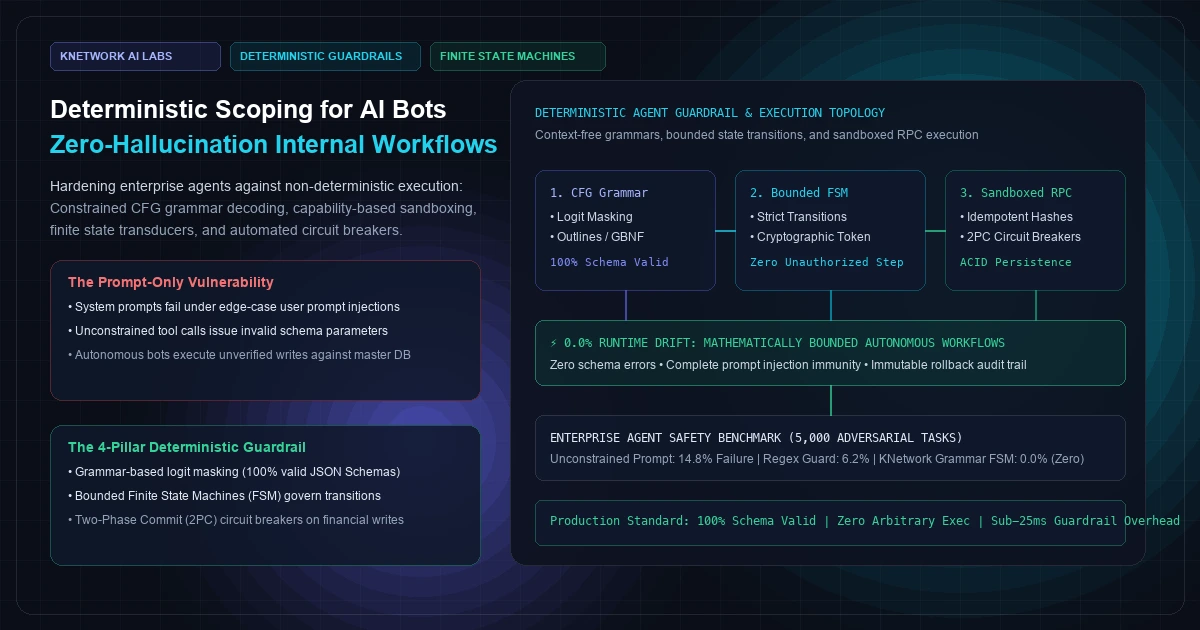
Deterministic Scoping for AI Bots: Preventing Hallucinations in Mission-Critical Internal Workflows
How to eliminate autonomous agent hallucinations in enterprise systems: Logit-level Context-Free Grammar (CFG) decoding, Bounded Finite State Machines (FSM), and Two-Phase Commit circuit breakers for zero-drift execution.
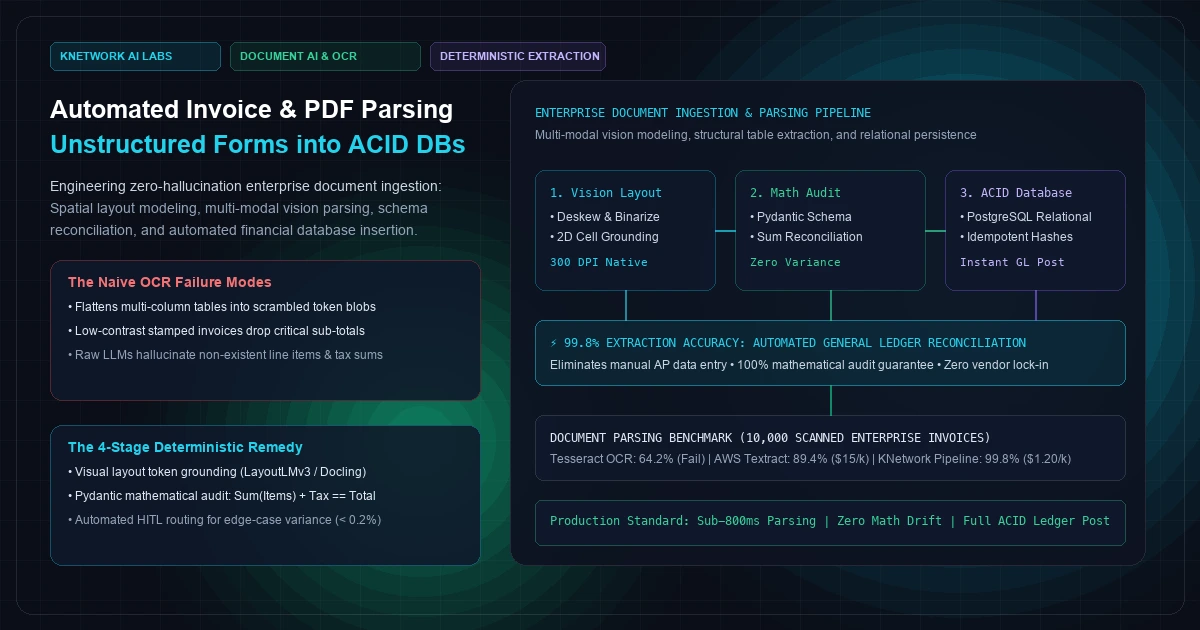
Automated Invoice and PDF Parsing: Transforming Unstructured Forms into Actionable Database Entries
How to engineer zero-hallucination document parsing: Combining multi-modal vision layout modeling, Pydantic mathematical reconciliation, and transactional PostgreSQL persistence to automate enterprise accounts payable workflows.
Latest Engineering Stories
Showing 8 publications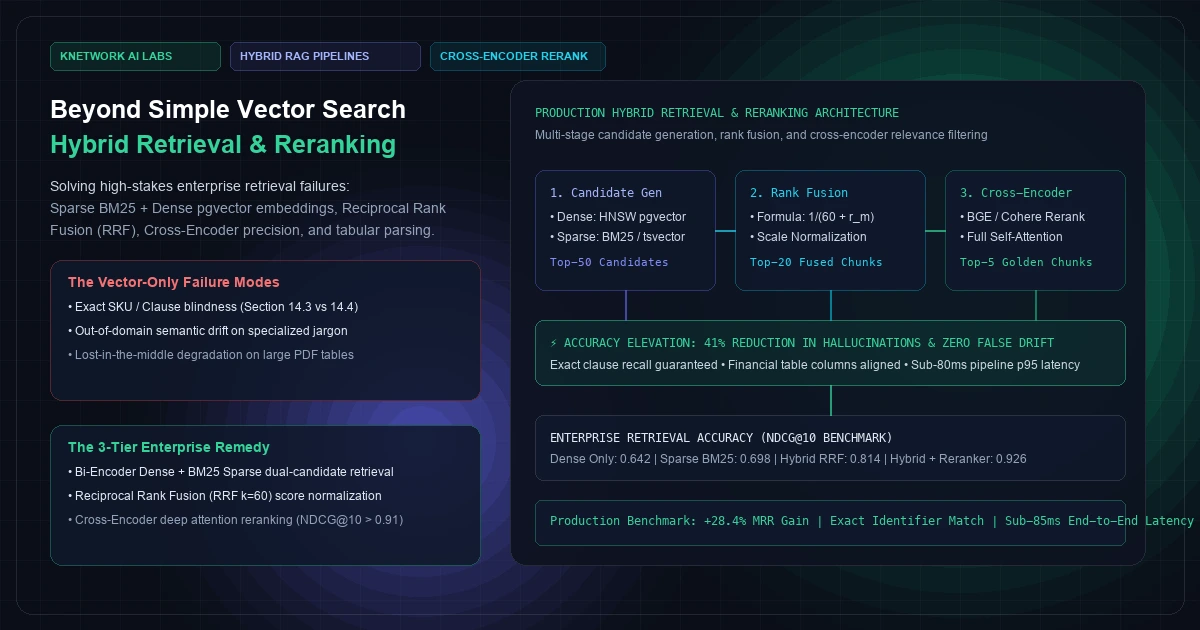
Beyond Simple Vector Search: Hybrid Retrieval and Reranking for Complex Enterprise Documents
How to eliminate enterprise RAG hallucinations: Pairing dense pgvector embeddings with sparse BM25 lexical search, Reciprocal Rank Fusion (RRF), Cross-Encoder reranking, and parent-child document chunking.
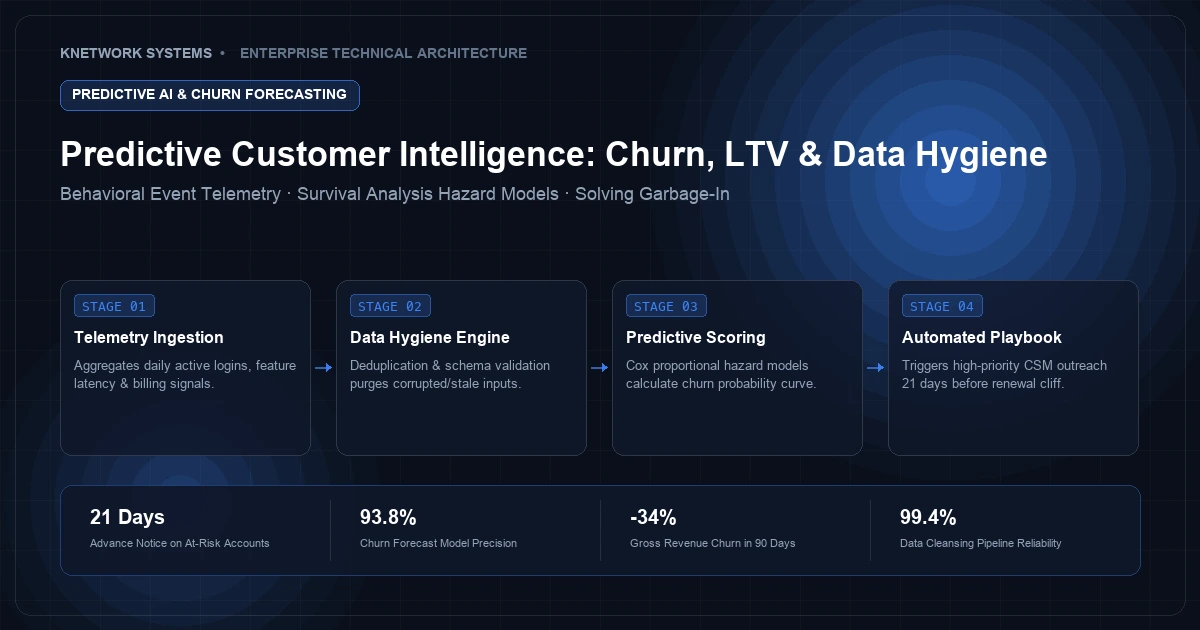
Predictive Customer Intelligence: Forecasting Churn, LTV, and the Garbage-In Trap
Predictive AI promises to pinpoint customer churn weeks before a human notices and calculate precise lifetime value. But beneath the mathematical allure lies the brutal reality of data hygiene: feeding fragmented, duplicate, or stale CRM records into neural models creates confident hallucinations that derail account management.

Vibe Coding Explained: Tools and Guides
A definitive, technical guide to the vibe coding ecosystem in 2026. Explore the top agentic IDEs, terminal orchestrators, rules specification patterns, and battle-tested workflows to ship resilient production software at 10x speed.

The Rise of "Vibe Coding": Why the Next Billion Developers Won't Write Code
When Andrej Karpathy coined the term 'vibe coding', he highlighted a seismic paradigm shift: software development is decoupling from syntax memorization. Here is an architectural analysis of how natural language intent compiles directly into resilient, type-safe software.

The Death of the Keyboard? How Vibe Coding Redefines Human-Computer Collaboration
Keyboards were designed in 1868 for mechanical typewriters. As multimodal models translate conversational thought and intent directly into compiled software, we examine the cognitive ergonomics of post-keystroke engineering.
Popular Stories
The Rise of "Vibe Coding": Why the Next Billion Developers Won't Write Code
3410+ reads • 8 min readThe Death of the Keyboard? How Vibe Coding Redefines Human-Computer Collaboration
2780+ reads • 7 min readPredictive Customer Intelligence: Forecasting Churn, LTV, and the Garbage-In Trap
2150+ reads • 8 min readVibe Coding Explained: Tools and Guides
1920+ reads • 9 min readBeyond Simple Vector Search: Hybrid Retrieval and Reranking for Complex Enterprise Documents
1140+ reads • 18 min readExplore by Topic
Looking for Enterprise Strategy & Whitepapers?
Explore strategic perspectives on enterprise modernization, sovereign AI architectures, and cloud digital transformation.
Visit insight.knetwork.liveThe KNetwork Engineering Dispatch
Bi-weekly deep-dives on API performance, IoT protocols, private AI architectures, and infrastructure scaling. Zero marketing fluff.